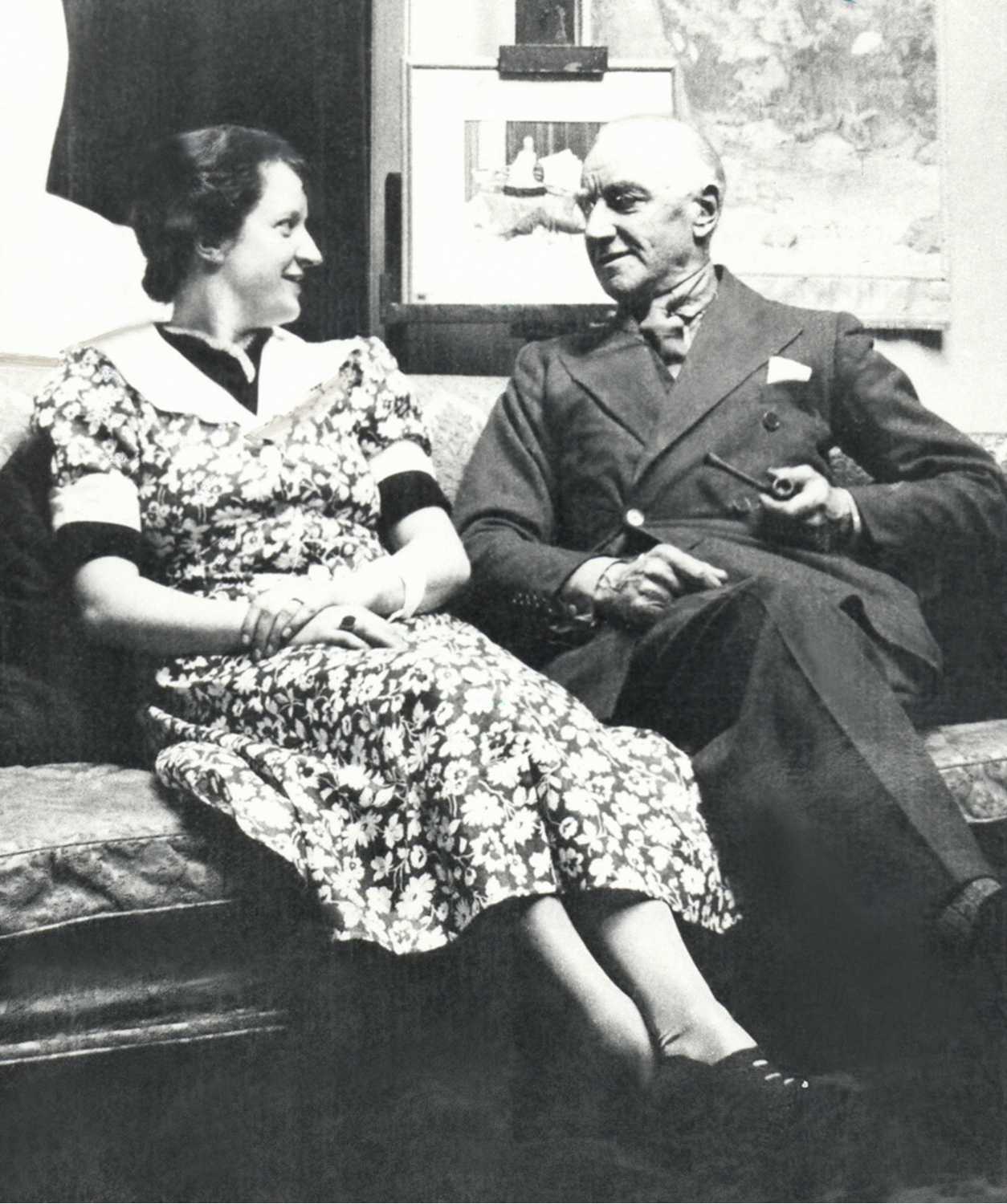
CHARLES ROBINSON SYKES: 18 DECEMBER 1875 – 6 JUNE 1950
- Rolls-Royce remembers Charles Sykes, born 150 years in the past on 18
December 1875 - A gifted artist and sculptor, greatest recognized for creating the Spirit
of Ecstasy mascot - The marque’s authentic inventive soul, who launched artistry as a
defining factor of Rolls-Royce - Many works held within the assortment of the world-renowned V&A
Museum, London
“Charles Rolls, together with his aggressive spirit and daredevil perspective
to life, was the center of Rolls-Royce. Henry Royce, the meticulous
and pushed engineer, was its thoughts. However the determine with the strongest
declare to be its first soul is Charles Robinson Sykes. Finest referred to as
the sculptor who created the Spirit of Ecstasy, Sykes was a
multifaceted and prolific artist whose work continues to be held in excessive
regard 150 years after his beginning. He was the primary of the marque’s
foundational figures to carry artistry and creativity to
Rolls-Royce, a legacy that endures at this time in our ever extra bold
and elaborate Bespoke and Coachbuild work. That his most well-known
piece represents solely a fraction of a wealthy, assorted physique of labor
speaks to the breadth of his expertise.”
Andrew Ball, Head of Company Relations, Rolls-Royce Motor Vehicles
Rolls-Royce Motor Vehicles celebrates the
150th anniversary of the beginning of some of the essential
people within the marque’s basis story: Charles Robinson Sykes.
A gifted artist, illustrator and sculptor, Sykes was greatest recognized for
creating the Spirit of Ecstasy mascot, which has gracefully guided
Rolls-Royce motor automobiles since 1911. As we speak, his work is recognised as
the second artistry and emotional expression first grew to become a part of the
marque’s identification – a contribution that formed the inventive spirit
nonetheless evident in each Rolls-Royce motor automobile.
To commemorate this anniversary, Rolls-Royce explores his life
and lasting affect on the marque.
Charles Robinson Sykes was born on 18December 1875 in Brotton, a
mining village close to Saltburn, in what’s now North Yorkshire, England.
Inspired by his father and uncle, each proficient beginner artists, he
determined to pursue knowledgeable profession, and started his creative
coaching at Rutherford Artwork Faculty in Newcastle. In 1898, he received a
scholarship to the Royal Faculty of Artwork in London, the place he studied
drawing, portray and sculpture. After graduating, he remained within the
capital, the place he rapidly established himself as a multitalented artist.
His talent as a draughtsman is clear within the massive assortment of
his drawings, work and cartoons held within the assortment of the
world-renowned V&A Museum, London. These embody fantastically
detailed designs for horse-racing trophies, vases and bowls, and
atmospheric illustrations for journal covers and ads,
produced beneath the pseudonym ‘Rilette’. His expertise for sculpture was
formally recognised when his bronze, A Bacchante, was
flaunted to appreciable acclaim on the Royal Academy of Arts (RA) in
London and the Paris Salon.
In 1902, Sykes was commissioned by {a magazine} writer to
produce some sketches. Unable to pay in money, the shopper launched
him to John Montagu, later 2nd Baron Montagu of Beaulieu, who at that
time was trying to launch his personal shiny weekly journal, The
Automotive Illustrated.
With Sykes offering ‘Illustrated’ components from cowl art work
to trend drawings, the journal flourished. It was one of many first
to print photographs in full color, and Sykes took full benefit of the
new inventive alternatives this supplied him. He had a selected
curiosity in Greek mythology, and infrequently launched classical references
into his work.
Sykes’s art work quickly caught the eye of Claude Johnson,
recognized merely as ‘CJ’, the primary industrial managing director of
Rolls-Royce. He commissioned six authentic Sykes oils for the corporate’s
1910-11 Catalogue, depicting Rolls-Royce motor automobiles arriving at venues
and events befitting the marque’s aristocratic patrons. These
photographs framed Rolls-Royces not merely as engineering achievements, however
as a supply of magnificence and expertise – an early expression of what
was to comply with. The marque additionally purchased the copyright to different works
displaying Rolls-Royces driving at nightfall, arriving on the prime of a steep
hill and effortlessly overcoming a snowstorm – actual issues for
drivers of the day.
Quickly afterwards, Sykes took on what could be his most well-known and
enduring fee: an official Rolls-Royce mascot. The corporate
described the winged figurine as “a swish little goddess”, wherein
Sykes completely captured, “the spirit of ecstasy, who has chosen
street journey as her supreme delight and alighted on the prow of a
Rolls-Royce automobile to revel within the freshness of the air, and the musical
sound of her fluttering draperies”. By means of this work, Sykes
launched a brand new dimension to the marque – the concept that a motor automobile
might possess not solely technical excellence, but in addition grace, magnificence
and serenity.
In creating the figurine, Sykes performed a vital function in
establishing Rolls-Royce’s defining traits. From the
daredevil racing driver, pioneering balloonist and record-breaking
aviator Charles Rolls, the marque acquired its spirit of endeavour,
at all times looking for to set new requirements for efficiency, consolation and
excellence. And if Rolls was the corporate’s coronary heart, then Henry Royce –
analytical, meticulous, stressed, modern – was its thoughts; the
mental basis of every little thing it produced.
Sykes was the corporate’s soul; he introduced artistry and creativity
to the model, which finds their expression at this time in ever extra
elaborate and impressive Bespoke and Coachbuild commissions. And
via his work and the Spirit of Ecstasy, he performed a defining
function in shaping the mystique and mythology that also surrounds
Rolls-Royce to at the present time.
Charles Sykes died in 1950; although greatest remembered for his
contribution to Rolls-Royce, he loved an extended, assorted and profitable
creative profession, leaving a considerable, numerous and pleasant physique of
work that’s nonetheless extremely regarded 150 years after his beginning.
Source link